
Common Roofing Problems in Central Illinois Homes and How to Fix Them
August 30, 2026
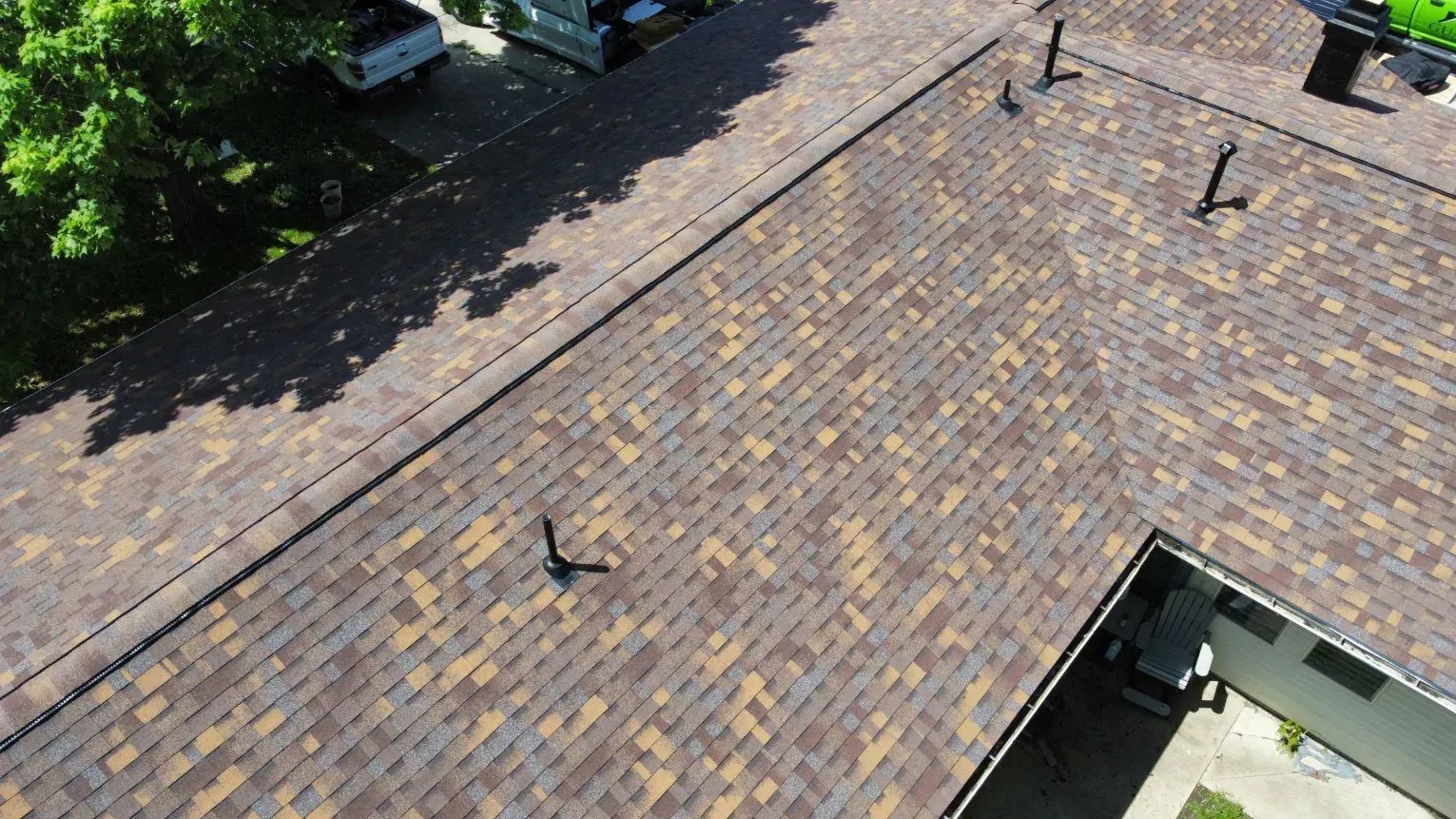
Quick Answer: Central Illinois roofs face a specific set of recurring problems: hail bruising from spring and summer storms, ice dams that form along the eaves in winter, wind uplift that peels or tears shingles during severe weather, granule loss from age and sun exposure, flashing failures around chimneys and vents, and attic ventilation issues that cook shingles from underneath. Each one leaves its own signature, and catching that signature early is what separates a small repair from a full section of roof needing replacement. A trained inspection is the only reliable way to confirm the cause and the right fix.
You notice it on a Saturday morning walk around the yard. A handful of shingles near the ridge look pockmarked, like someone took a small hammer to them. Down at the gutter line, an icicle the length of your forearm hangs off the eave, and behind it the shingles look strangely wet even though it hasn't rained in days. Neither of these things happened overnight, and neither of them is going to fix itself. Central Illinois puts a roof through a punishing rotation of weather each year, and the damage tends to show up in the same handful of patterns, over and over, on houses across Sullivan, Champaign, Effingham, Charleston, Mattoon, and Springfield.
Knowing what those patterns look like, and why they happen here specifically, gives you a real head start. Below are the roofing problems that turn up most often on Central Illinois homes, what causes each one, and what actually fixes it.
Climate and Plant Selection
Selecting appropriate vegetation is crucial for the success of green roofs in the Mid-Atlantic region. Native and drought-tolerant plants are ideal, ensuring survival during dry spells and high-intensity storms. Sedums, grasses, and other hardy species maintain runoff retention and resist seasonal stress, supporting regulatory compliance throughout the year.
Hail Bruising From Spring and Summer Storms
Central Illinois sits in a stretch of the country that sees a meaningful number of hail events every year, and most of them arrive in the spring and early summer alongside thunderstorms rolling through from the west. The damage isn't always obvious. That's the part that trips people up.
What It Looks Like
Hail damage often appears as soft, bruised spots where the shingle mat has been crushed beneath the surface. Larger hail may crack shingles or knock granules loose, creating random damage patterns unlike normal, even aging.
Why It Matters
A bruised shingle may look intact but have weakened structural integrity, allowing moisture to penetrate over time. Dents on flashing, vents, and gutters can also confirm that the roof experienced hail impact during the storm.
How to Fix It
A few isolated bruised shingles may be repaired individually, while widespread damage across a roof slope may require section replacement or a complete reroof. An inspection after hail helps determine the appropriate repair before damage worsens.
Climate and Plant Selection
Selecting appropriate vegetation is crucial for the success of green roofs in the Mid-Atlantic region. Native and drought-tolerant plants are ideal, ensuring survival during dry spells and high-intensity storms. Sedums, grasses, and other hardy species maintain runoff retention and resist seasonal stress, supporting regulatory compliance throughout the year.
Ice Dams Forming Along the Eaves
Winter in Central Illinois swings between hard cold stretches and thaws, and that back-and-forth is exactly what builds an ice dam.
How They Form
Ice dams form when heat escapes into the attic and warms the roof deck, melting snow above. Water runs toward colder eaves, where it refreezes and gradually builds an ice barrier that traps additional meltwater.
What It Looks Like
Common signs include thick ice along the gutter edge, unusually heavy icicles, and water stains appearing on ceilings near exterior walls. During a thaw, you may also notice dripping around windows or other openings.
Climate and Plant Selection
Selecting appropriate vegetation is crucial for the success of green roofs in the Mid-Atlantic region. Native and drought-tolerant plants are ideal, ensuring survival during dry spells and high-intensity storms. Sedums, grasses, and other hardy species maintain runoff retention and resist seasonal stress, supporting regulatory compliance throughout the year.
TIP: Pull back the insulation question before you blame the shingles. Ice dams almost always trace back to heat leaking into the attic space, not a failure in the roofing material itself. A well-insulated, well-ventilated attic keeps the whole roof deck close to the outdoor temperature, which stops the melt-refreeze cycle before it starts.
How to Fix It
Long-term prevention requires proper attic insulation and balanced ventilation to reduce uneven roof temperatures. For existing ice buildup, a professional can remove it safely without damaging shingles, while attempting to chip ice away yourself may cause additional damage.
Wind Uplift and Missing or Lifted Shingles
Severe thunderstorms and the occasional straight-line wind event are a normal part of a Central Illinois spring and summer, and wind is one of the more direct ways a roof takes damage.
After a windstorm, walk the perimeter of the house and look for shingles that are missing outright, shingles with a lifted edge that no longer sits flat, or shingle tabs scattered in the yard or against the fence line. Sometimes the damage is subtle: a shingle looks fine from a distance but the seal along its bottom edge has broken, leaving it loose enough to flap in the next gust.
The Mechanism
Every shingle relies on a sealant strip that bonds it to the row below. Age, heat, or a shingle that was already curling gives wind an edge to grab. Once that seal breaks on one shingle, the exposed nail line and the shingle below it are next in line for the same treatment.
Fixing this comes down to how far it's spread. A single lifted shingle or two is a simple repair. A pattern of missing shingles across a slope, especially paired with exposed nail heads or bare felt, calls for a broader repair and a look at whether the surrounding shingles lost their seal too, even if they're still in place. Leaving lifted shingles alone through the next storm almost guarantees they'll be gone by the one after that.
Climate and Plant Selection
Selecting appropriate vegetation is crucial for the success of green roofs in the Mid-Atlantic region. Native and drought-tolerant plants are ideal, ensuring survival during dry spells and high-intensity storms. Sedums, grasses, and other hardy species maintain runoff retention and resist seasonal stress, supporting regulatory compliance throughout the year.
Granule Loss and Shingle Aging
Every asphalt shingle sheds some granules over its lifetime. The question is whether what you're seeing is normal aging or something further along.
What Normal Aging Looks Like
A light, even layer of granules in the gutters is normal, particularly on older roofs. These granules protect asphalt from ultraviolet exposure, so gradual loss eventually leaves shingles looking slightly duller or darker as they age.
What Accelerated Loss Looks Like
Heavy granule accumulation after one storm, concentrated bald spots, or unusually brittle shingles can signal accelerated deterioration. Hail, poor attic ventilation, manufacturing defects, and other roofing problems may cause granules to disappear faster than expected.
Making the Call
Even, gradual granule loss can often be monitored with routine maintenance. Uneven or excessive loss requires an inspection to identify the cause, because ventilation problems, hail damage, and normal aging require very different solutions.
Climate and Plant Selection
Selecting appropriate vegetation is crucial for the success of green roofs in the Mid-Atlantic region. Native and drought-tolerant plants are ideal, ensuring survival during dry spells and high-intensity storms. Sedums, grasses, and other hardy species maintain runoff retention and resist seasonal stress, supporting regulatory compliance throughout the year.
Flashing Failures Around Chimneys and Vents
Flashing is the metal that seals the transitions on a roof, around chimneys, plumbing vents, skylights, and where two roof planes meet. It does a small job that matters enormously.
A leak that only shows up during heavy, wind-driven rain, rather than every time it rains, often traces back to flashing rather than the shingles themselves. Rust streaks running down a chimney, flashing that's visibly pulled away from the brick or siding, or caulk that's cracked and separated around a vent pipe are all signs the seal has broken down. Flashing moves with the house and the roof over years of freeze-thaw cycles, and the caulk or cement sealing its edges dries out and cracks well before the metal itself wears out. Around a chimney especially, the brick and the roof deck expand and contract at different rates, which stresses the flashing right at the seam.
Getting It Fixed
Flashing repair is usually a targeted, contained job rather than a full roof project, but it needs to be done by someone who understands how the layers around a chimney or vent actually integrate with the shingles above and below it. A patch of caulk smeared over failing flashing buys a few months at best.
Climate and Plant Selection
Selecting appropriate vegetation is crucial for the success of green roofs in the Mid-Atlantic region. Native and drought-tolerant plants are ideal, ensuring survival during dry spells and high-intensity storms. Sedums, grasses, and other hardy species maintain runoff retention and resist seasonal stress, supporting regulatory compliance throughout the year.
Attic Ventilation and Moisture Problems
This is the roofing problem that hides the longest, because you rarely see it from the driveway.
The Warning Signs
An attic that feels noticeably hotter than the outside air on a summer afternoon, frost on the underside of the roof deck on a cold winter morning, or a musty smell when you open the attic hatch are all signs the space isn't breathing the way it should. From the outside, shingles that are curling or aging unevenly across the whole roof, not just the sun-facing side, often point back to what's happening in the attic below.
Shingles get heated from above by the sun and, when ventilation is poor, cooked from underneath by trapped attic heat too. That double exposure ages a roof faster than its warranty accounts for. In winter, the same poor airflow traps moisture, which feeds ice dams and can lead to mold or rot on the roof deck and rafters over time.
Climate and Plant Selection
Selecting appropriate vegetation is crucial for the success of green roofs in the Mid-Atlantic region. Native and drought-tolerant plants are ideal, ensuring survival during dry spells and high-intensity storms. Sedums, grasses, and other hardy species maintain runoff retention and resist seasonal stress, supporting regulatory compliance throughout the year.
WARNING: Do not go into the attic to inspect insulation or ventilation on your own if you're not familiar with where the joists and safe footing are. Attic floors are often just insulation over open ceiling drywall, and a misplaced step can send you straight through into the room below.
Fixing The Balance
A balanced ventilation system, intake at the soffits and exhaust near the ridge, keeps air moving through the attic year-round. Getting that balance right usually takes someone who can evaluate the whole system, not just add a single vent and hope it helps.
Why Central Illinois Weather Makes These Problems More Common
None of these issues are unique to this part of the state, but the frequency and the mix are. A Sullivan or Moultrie County roof deals with hail-producing storms in the spring, humid, sun-heavy summers that bake shingles from above, and winters that swing through repeated freeze-thaw cycles rather than staying reliably cold. That combination stacks stress on a roof in a way that milder or more stable climates don't produce.
A roof in Champaign or Springfield built to handle one season well still has to survive the next three. And in this part of Illinois, the problems above tend to show up earlier than the shingle manufacturer's general estimates would suggest.
Climate and Plant Selection
Selecting appropriate vegetation is crucial for the success of green roofs in the Mid-Atlantic region. Native and drought-tolerant plants are ideal, ensuring survival during dry spells and high-intensity storms. Sedums, grasses, and other hardy species maintain runoff retention and resist seasonal stress, supporting regulatory compliance throughout the year.
What to Do When You Spot One of These Problems
Start from the ground. Walk the perimeter of your home after any significant storm and look up at each slope for missing shingles, obvious dents, or ice buildup depending on the season. Check the gutters for granules and look inside the attic, if you can do so safely, for stains, frost, or a musty smell. None of that replaces a real inspection, but it tells you whether one is overdue.
From there, bring in someone who can get close enough to read the pattern accurately. The difference between a small repair and a much larger project usually comes down to catching the problem while it's still isolated, rather than after it's spread across a whole slope or worked its way into the deck underneath.
Climate and Plant Selection
Selecting appropriate vegetation is crucial for the success of green roofs in the Mid-Atlantic region. Native and drought-tolerant plants are ideal, ensuring survival during dry spells and high-intensity storms. Sedums, grasses, and other hardy species maintain runoff retention and resist seasonal stress, supporting regulatory compliance throughout the year.
Frequently Asked Questions
How can I tell hail damage from normal shingle wear?
Hail damage appears as random dents, bruises, or scattered granule loss, often with dings on gutters and vents. Normal wear is generally even and consistent with the roof’s age and overall condition.
Do ice dams mean my roof needs to be replaced?
Not usually. Ice dams typically indicate inadequate attic insulation or ventilation rather than failed shingles. Improving airflow and insulation can prevent recurrence. Replacement may only be necessary if water has caused deck damage.
How much wind does it take to lift shingles?
There is no single wind speed. Shingle condition, age, installation quality, and seal strength all matter. Older, curling, or poorly sealed shingles can lift during winds that a newer roof withstands.
Is granule loss in my gutters something to worry about?
Some granule loss is normal as asphalt shingles age. Heavy accumulation after one storm, concentrated bald spots, or unusually rapid loss may indicate hail damage, poor ventilation, manufacturing defects, or advanced deterioration.
Why does my roof only leak when it’s windy and raining?
Wind-driven rain can enter gaps around chimneys, vents, skylights, or other flashing areas that normal rainfall cannot reach. This pattern often indicates a flashing problem, although a professional inspection is needed to confirm.
How often should attic ventilation be checked?
Attic ventilation should generally be evaluated annually, preferably before winter. Insulation changes, roof replacements, moisture, frost, or unusually high attic temperatures can affect airflow and may require an earlier inspection.
Climate and Plant Selection
Selecting appropriate vegetation is crucial for the success of green roofs in the Mid-Atlantic region. Native and drought-tolerant plants are ideal, ensuring survival during dry spells and high-intensity storms. Sedums, grasses, and other hardy species maintain runoff retention and resist seasonal stress, supporting regulatory compliance throughout the year.
Keeping Your Central Illinois Roof Ready for Every Season
Central Illinois weather can put steady pressure on a residential roof, from summer hail and strong winds to winter ice and moisture. Recognizing early signs such as bruised shingles, flashing deterioration, granule loss, or poor attic ventilation allows homeowners to address problems before they spread. Regular inspections also help identify hidden issues that may not be visible from the ground, protecting both the roofing system and the interior of the home.
For homeowners in Sullivan, IL, Guardian Roofing PLLC
brings more than 40
years of roofing experience to the challenges of the local climate. A careful evaluation can determine whether a roof needs a simple repair, targeted maintenance, or more extensive attention. Staying ahead of seasonal damage helps preserve the roof's performance, reduce unexpected problems, and keep the home protected through Central Illinois' changing weather.
Climate and Plant Selection
Selecting appropriate vegetation is crucial for the success of green roofs in the Mid-Atlantic region. Native and drought-tolerant plants are ideal, ensuring survival during dry spells and high-intensity storms. Sedums, grasses, and other hardy species maintain runoff retention and resist seasonal stress, supporting regulatory compliance throughout the year.
Share this article