
How Gutters Protect Your Roof and Foundation (And When to Replace Them)
September 30, 2026
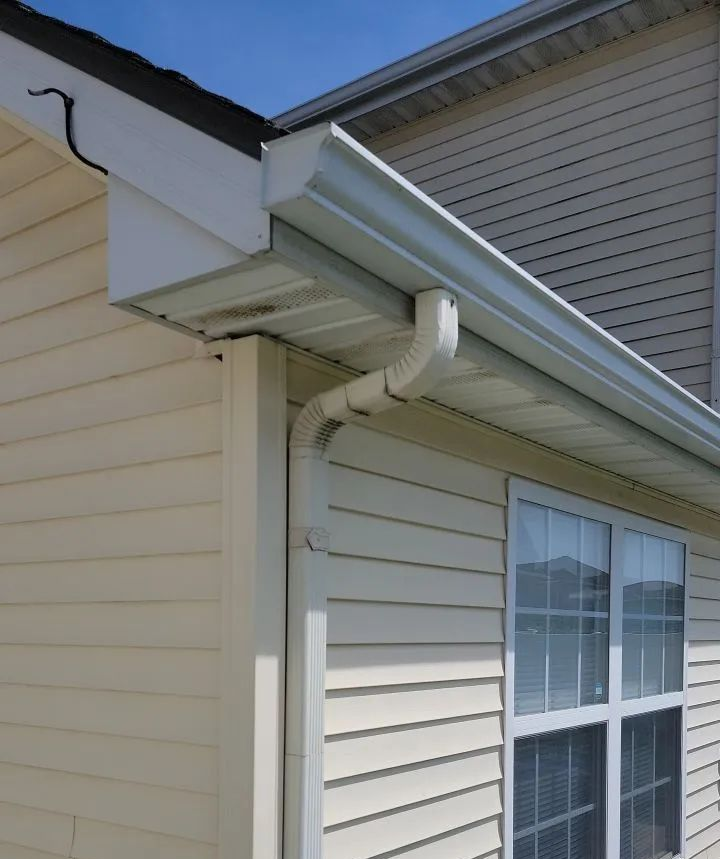
Quick Answer: Gutters collect the water your roof sheds and carry it away from the places that cannot handle it, namely the roof edge, the fascia boards, the siding, the soil around your foundation, and the basement or crawl space below. When they work, most people never think about them. When they sag, leak, or clog, water spills at the eaves, soaks the wood behind the gutter, and pools beside the foundation. Gutters are ready for replacement when they sag even after being refastened, leak at several seams, show rust or cracks, pull away from the fascia, or leave stains and puddles behind after a normal rain. A yearly inspection tells you which side of that line your system sits on.
It rains hard on a Tuesday evening in April, and you stand at the back door watching a sheet of water roll off the edge of the roof instead of down the gutter. It splashes on the patio, runs along the siding, and pools in a low spot against the house. By morning the pool has sunk into the soil, and you will not see where it went. That quiet disappearance is the part that matters. Water that soaks in beside a foundation does not disappear. It pushes, it freezes, it thaws, and it finds its way toward the lowest part of the house.
Gutters look like a minor piece of trim, but they are a working part of your roof system. This guide explains what gutters protect, what happens when they stop doing their job, and how to tell whether yours need repair, a fresh start with a new system, or simply a good cleaning.
Climate and Plant Selection
Selecting appropriate vegetation is crucial for the success of green roofs in the Mid-Atlantic region. Native and drought-tolerant plants are ideal, ensuring survival during dry spells and high-intensity storms. Sedums, grasses, and other hardy species maintain runoff retention and resist seasonal stress, supporting regulatory compliance throughout the year.
What a Gutter System Actually Does
A roof is a large collection surface. Industry rules of thumb commonly estimate that one inch of rain falling on a 1,000 square foot roof produces more than 600 gallons of runoff. A typical Central Illinois home can shed several thousand gallons in a single season of heavy storms. Without a gutter, all of that water drops from the eave in a narrow line, hits the ground near the foundation, and splashes back up onto the siding.
A gutter system changes that in three steps. The gutter catches the water along the roof edge. The downspouts carry it down the wall. The extensions and the grading at the bottom release it several feet away from the house. If any one of those three steps fails, the other two cannot make up for it. A perfect gutter with a downspout that dumps beside the foundation still sends water where it does harm, and a long downspout extension does nothing if the gutter above it overflows.
The Gutter
The trough itself needs a slight slope toward the downspout, commonly described as about 1/4 inch of drop for every 10 feet of run. Too flat and water stands in the trough, which breeds mosquitoes and rots the metal. Too steep and water rushes past the outlet during a downpour.
The Downspouts
Many homes have one downspout for every 30 to 40 feet of gutter, although roof size and pitch can change that number. A roof with large, steep sections and too few downspouts can overwhelm a system even when every part is in good shape.
The Discharge Point
Guidance from many exterior contractors suggests that downspouts should release water roughly 4 to 10 feet from the foundation, with the longer distance making sense on heavy clay soils. Central Illinois has plenty of clay, and clay holds water longer than sandy soil does.
Climate and Plant Selection
Selecting appropriate vegetation is crucial for the success of green roofs in the Mid-Atlantic region. Native and drought-tolerant plants are ideal, ensuring survival during dry spells and high-intensity storms. Sedums, grasses, and other hardy species maintain runoff retention and resist seasonal stress, supporting regulatory compliance throughout the year.
How Gutters Protect Your Roof
Most people think of gutters as foundation protection, and they are. The roof itself benefits just as much, in ways that are easy to miss from the ground.
The Fascia And Roof Deck Edge
The fascia board runs along the eave behind the gutter, and the roof deck and the first row of shingles sit directly above it. When gutters overflow or pull away, water runs behind the trough and soaks the fascia and the edge of the roof deck. Wood that stays damp softens, stains, and eventually rots. A rotted fascia cannot hold a gutter in place, so the problem feeds itself.
The Drip Edge And First Shingle Course
The bottom edge of the roof is where water leaves the shingles, and it is also where wind driven rain and melting snow tend to push water backward under the first row. A gutter that stays clear and level keeps that flow moving in one direction. A gutter full of wet leaves holds water against the roof edge instead.
Winter Ice Along The Eaves
In a Central Illinois winter, daytime thaws followed by freezing nights turn clogged gutters into ice shelves. The weight of ice can bend the trough and loosen the fasteners. Ice that builds along the eave can also back water up under the shingles at the edge of the roof. Clear gutters will not stop every ice dam, because attic heat and ventilation play a large role, but clogged ones make ice problems more likely and more damaging.
Climate and Plant Selection
Selecting appropriate vegetation is crucial for the success of green roofs in the Mid-Atlantic region. Native and drought-tolerant plants are ideal, ensuring survival during dry spells and high-intensity storms. Sedums, grasses, and other hardy species maintain runoff retention and resist seasonal stress, supporting regulatory compliance throughout the year.
TIP: The fascia is the quickest place to read your gutter system. Stand back from the house after a rain and look for dark streaks below the gutter, peeling paint on the fascia, or wet patches on the wall. Those marks show where water is leaving the system and going somewhere it should not.
How Gutters Protect Your Siding and Entryways
Water that spills over a gutter edge does not stay in one place. It runs down the wall, and it leaves a trail.
Staining And Moisture In The Siding
Repeated overflow leaves vertical streaks, green algae, and in some cases warped or swollen siding near the base of the wall. Over time, water that gets behind siding can soak the sheathing and insulation underneath.
Splash Back On Lower Walls
Even a healthy roof edge sends water to the ground. Without a gutter, the ground splashes mud and moisture onto the lowest courses of siding, where the wood or fiber cement trim is most vulnerable.
Climate and Plant Selection
Selecting appropriate vegetation is crucial for the success of green roofs in the Mid-Atlantic region. Native and drought-tolerant plants are ideal, ensuring survival during dry spells and high-intensity storms. Sedums, grasses, and other hardy species maintain runoff retention and resist seasonal stress, supporting regulatory compliance throughout the year.
How Gutters Protect Your Foundation and Basement
Foundation problems start slowly, and gutters are one of the few parts of the house that can slow them down.
Soil Saturation
Soil next to a foundation that stays wet becomes heavy and soft. Clay soils swell when wet and shrink when dry, which puts uneven pressure on basement walls and footings. Over many seasons, that movement can open hairline cracks, and cracks let in more water.
Hydrostatic Pressure
When the ground around a basement fills with water, the water pushes against the wall from outside. That pressure looks for any weak spot, such as a crack, a joint, or a window well, and the result is often a damp wall, a musty smell, or a puddle on the floor after a storm.
Freeze And Thaw
Water in the soil expands when it freezes. A winter of repeated freezing and thawing next to a wet foundation wall adds stress that a dry wall would not see. Central Illinois gets enough of these cycles each year that keeping the soil drier is a real advantage.
Climate and Plant Selection
Selecting appropriate vegetation is crucial for the success of green roofs in the Mid-Atlantic region. Native and drought-tolerant plants are ideal, ensuring survival during dry spells and high-intensity storms. Sedums, grasses, and other hardy species maintain runoff retention and resist seasonal stress, supporting regulatory compliance throughout the year.
WARNING: Never climb onto a roof or lean a tall ladder against a gutter to check it yourself. Gutters are not designed to hold a person's weight, and wet or icy ground makes ladders slip. Look from the ground with binoculars, or ask a roofing professional to inspect it safely.
Signs Your Gutters Are Failing
Gutters fade from view, so problems tend to grow for a season or two before anyone notices. These are the signs that deserve attention.
Sagging Or Pulling Away
Gutters that dip in the middle, tilt away from the house, or show a gap between the trough and the fascia have lost their fasteners or their support. Sagging is one of the most commonly reported gutter problems among homeowners and contractors.
Water Spilling Over During Normal Rain
A little overflow in a cloudburst is expected. Overflow during ordinary rain usually means a clog, a pitch problem, or a trough that is too small for the roof.
Leaking Seams And Joints
Sectional gutters have seams every 10 feet or so, and sealant at those joints breaks down over the years. Drip marks below a seam, or a trail of rust from one, point to a failing joint.
Rust, Cracks, And Flaking Paint
Steel gutters rust from the inside out. Aluminum can dent, crack, or oxidize. Peeling paint on the outside of a trough often means water is sitting in it.
Stains And Puddles At The Wall
Vertical streaks on the siding and puddles or eroded soil along the foundation are the clearest evidence that water is leaving the system where it should not.
Climate and Plant Selection
Selecting appropriate vegetation is crucial for the success of green roofs in the Mid-Atlantic region. Native and drought-tolerant plants are ideal, ensuring survival during dry spells and high-intensity storms. Sedums, grasses, and other hardy species maintain runoff retention and resist seasonal stress, supporting regulatory compliance throughout the year.
Repair or Replace: How to Decide
Not every gutter problem calls for a new system. Several common issues respond well to simple repairs, and knowing the difference saves time and frustration.
When Repair Usually Makes Sense
A clog, a few loose hangers, one leaking seam, or a single damaged downspout section can often be fixed without touching the rest of the system. If the gutters are otherwise straight, sound, and well attached, cleaning and spot repairs are a reasonable starting point.
When Replacement Usually Makes Sense
Replacement becomes the better choice when problems are spread across the whole system instead of one spot. Sagging along multiple runs, seams that keep leaking after resealing, widespread rust, cracks from ice damage, or a fascia that has been repeatedly soaked all suggest the system has reached the end of its useful life. Patching a worn out system tends to be a cycle of small fixes that never end.
Age As A Guide
Published lifespan ranges vary by material. Vinyl is commonly listed at roughly 10 to 15 years, galvanized steel at about 15 to 20 years, aluminum at up to around 25 years, and copper at many decades or more. Those numbers assume regular cleaning and a reasonable climate. Central Illinois has ice, heavy storms, and tree debris, so a system in this region may land at the lower end of its range.
Size And Capacity
An older system may use a 4 inch trough on a roof that would do better with a 5 or 6 inch trough, or too few downspouts for the roof area. If water overflows even when the gutters are clean, capacity may be the issue, and adding length or size at replacement time can solve a problem that repairs cannot.
Continuous Or Sectional
Continuous run gutters are formed to length on site, which leaves only the corners and downspout outlets as joints. Fewer joints mean fewer places to leak. Many homeowners replacing older sectional gutters choose a continuous run for that reason.
Climate and Plant Selection
Selecting appropriate vegetation is crucial for the success of green roofs in the Mid-Atlantic region. Native and drought-tolerant plants are ideal, ensuring survival during dry spells and high-intensity storms. Sedums, grasses, and other hardy species maintain runoff retention and resist seasonal stress, supporting regulatory compliance throughout the year.
Material Choices in Plain Terms
If you do replace your gutters, the material shapes how long they last and how they handle Central Illinois weather.
Aluminum
Lightweight, resistant to rust, and available in many colors. Aluminum is the most common residential choice. It can dent under heavy ice or a fallen branch.
Steel
Stronger than aluminum and better able to handle heavy snow loads, but steel needs good coatings and will rust if the finish is scratched.
Copper
Very long lived and naturally weathering to a green patina. It is usually chosen for appearance and longevity on custom homes and historic properties.
Vinyl
Easy to install, but it can become brittle in cold weather and crack under ice. Central Illinois winters are hard on it.
Climate and Plant Selection
Selecting appropriate vegetation is crucial for the success of green roofs in the Mid-Atlantic region. Native and drought-tolerant plants are ideal, ensuring survival during dry spells and high-intensity storms. Sedums, grasses, and other hardy species maintain runoff retention and resist seasonal stress, supporting regulatory compliance throughout the year.
Gutters, Roofing, and Siding Work Best as a Team
Gutters are the lowest part of the roof system, so anything that affects the roof edge affects them too.
New Roofing And Gutter Timing
When a roof is replaced, the fascia, drip edge, and roof edge are exposed, which makes it a practical time to check the gutters, repair any damaged fascia, and set new gutters at the right pitch. Replacing gutters later is perfectly possible, but doing the two jobs together often saves a second round of disruption.
Siding
If siding is being repaired or replaced, gutters that have been overflowing are worth addressing first. Otherwise the same water may damage the new siding in a few years.
Inspections
A roof inspection is a good moment to look at the gutters, because the same ladder, the same eye, and the same questions apply. A trained inspector can check slope, fasteners, fascia condition, downspout discharge, and the ground grading in one visit.
Gutter Guards
In a yard with mature trees, guards can reduce how often the gutters fill with debris, although no guard removes the need for occasional cleaning.
Climate and Plant Selection
Selecting appropriate vegetation is crucial for the success of green roofs in the Mid-Atlantic region. Native and drought-tolerant plants are ideal, ensuring survival during dry spells and high-intensity storms. Sedums, grasses, and other hardy species maintain runoff retention and resist seasonal stress, supporting regulatory compliance throughout the year.
Frequently Asked Questions
How often should gutters be cleaned?
Many contractors recommend at least twice a year, in late spring and late fall. Homes surrounded by large trees may need cleaning more often, sometimes every season.
Can failing gutters really damage a foundation?
They can contribute. When roof water lands beside the house and soaks into the soil, it adds moisture and pressure against the foundation. Foundation problems usually have several causes, but controlling roof water is one of the simpler steps you can take to reduce the risk.
How far should downspouts carry water from the house?
Common guidance is roughly 4 to 10 feet, with heavier clay soils benefiting from the longer distance. The ground near the house should also slope gently away from the walls.
How long do gutters last?
It depends on the material, the installation, and the upkeep. Published ranges run from about 10 to 15 years for vinyl to several decades for copper, with aluminum often quoted around 20 to 25 years. Ice, heavy storms, and debris can shorten those numbers in Central Illinois.
Should I repair or replace sagging gutters?
If the sag is limited to one section and the fascia is sound, refastening or adding hangers often works. If the sag appears along several runs, returns after repair, or comes with rot or rust, replacement is usually the longer lasting choice.
Do gutters matter if my yard slopes away from the house?
Yes. Grading helps, but roof runoff is concentrated along the eaves and can erode soil, stain siding, and soak fascia even on a well graded lot. Gutters and grading work together.
Climate and Plant Selection
Selecting appropriate vegetation is crucial for the success of green roofs in the Mid-Atlantic region. Native and drought-tolerant plants are ideal, ensuring survival during dry spells and high-intensity storms. Sedums, grasses, and other hardy species maintain runoff retention and resist seasonal stress, supporting regulatory compliance throughout the year.
Keeping Roof Water Away From Your Home
Gutters do quiet work that protects nearly every part of the exterior. They keep the fascia dry, the siding clean, and the soil beside the foundation from turning heavy with water. Guardian Roofing PLLC has served Sullivan, IL for more than 40 years, and the same lesson comes up on homes of every age: roof water causes the most harm when nobody is watching where it goes. A system that catches, carries, and releases runoff prevents problems long before they show.
Knowing the warning signs makes the decision simpler. Sagging runs, leaking seams, rust, stains on the siding, and puddles along the wall all point to water leaving the system in the wrong place. A single clog or loose hanger can be handled with a repair, while problems spread across several sections usually call for replacement. A yearly look from the ground, along with cleaning, keeps small issues small and lets the roof, siding, and foundation do their jobs for years.
Climate and Plant Selection
Selecting appropriate vegetation is crucial for the success of green roofs in the Mid-Atlantic region. Native and drought-tolerant plants are ideal, ensuring survival during dry spells and high-intensity storms. Sedums, grasses, and other hardy species maintain runoff retention and resist seasonal stress, supporting regulatory compliance throughout the year.
Share this article